Sunday, December 13, 2015

The Great Turkey Experiment

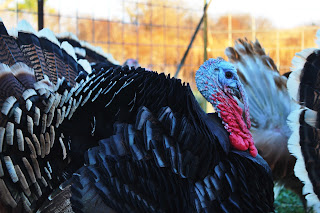
2015 was the year of the "Great Turkey Experiment".  We started with twelve little balls of fluff the beginning of May and concluded with eleven freshly dressed turkeys chilling in a kiddie pool about seven months later. Even raised on pasture, turkeys consume a lot of grain and require daily shelter moves frequent rotations of their paddock. A few adventurous ones would fly over the electric netting and roam the farm until we rounded them up and herded them back home. Most days the rogue escapee would hop themselves back in as the sun was going down. They enjoyed each other's company and instinctively roosted together on top of their shelter at the end of the day.

I was confident I could provide the daily care of these birds, but I knew I could not butcher them. Fortunately one of our Amish neighbors, Mr. Stutzman, agreed to perform the deed the Tuesday before Thanksgiving. On Monday night we all walked quietly into their pen under the light of the full moon and calmly caught each one and ushered it into a large dog crate. On Tuesday morning Elliot and I loaded them into the back of the truck and delivered them to the Stutzman's - a mere mile away. We returned five hours later to catch David and his wife bagging the last of the birds. They looked enormous and impeccably done. I was thrilled!

We raced home to weigh them and get them on ice as pick-up time was looming. The four hens ranged in size from 7 - 11 pounds and the seven toms were between 16 - 18 pounds. Fortunately there were turkeys to meet the requests of all of the customers. Pick up went smoothly and everyone hefted away their farm-fresh turkeys in good spirits. I was relieved, but still anxious about the final test. How would they taste? After all those months and for the price of $6/lb, I wanted them to be the best turkeys they had ever prepared!

On Thanksgiving Day, the reports started trickling in. Here are some customer photos and feedback.


The legs were much longer than a "regular" turkey. The proportion of white meat to dark meat was much more even. This is due to the fact that they lived a typical turkey life strutting around and getting daily exercise.


Many used the giblets for stock and stuffing.


Several customers brined their birds with the typical salt and water then added other ingredients like peppercorns and brown sugar to enhance the flavor.


Here's an amazing trussing job, straight out of the Joy of Cooking!


Most agreed that the cooking time was much shorter than a store bought bird. Watching the temperature of the turkey seemed to be more critical than watching the clock.


Everyone assured me they would buy another bird next year. 


Was it a success? Yes. Did I make money? Well, yes - if you consider $2/day fair compensation. As with many projects on the farm, it was more a labor of love. I told my family several times over the months - mostly when herding pooping turkeys off the deck- to smack me over the head if I mentioned turkeys again next spring!

When you are able to raise such an amazing bird and put delicious local food at the center of a holiday table, you start to forget the challenges.

There are some things I need to tweak and I had to turn many people down. But this winter will give me a chance plan for next year's batch!


Thanks to Laura Wolf, Bonnie Riggan & Mike Havercamp for sharing your dinners with us!


Wednesday, November 11, 2015

Fall on the Homestead

Fall has been gentle and glorious here in Iowa. The pastures are still green and the parkas are still buried in the closet. There is much daily activity on the farm as it is a season of beginnings and endings.


Several Golden Egg customers mentioned their desire for local pasture raised turkeys. After a bit of research I decided to give it a whirl. We started off the month of May with a small flock of heritage turkeys. Heritage birds are different from your run of the mill commercial bird. They take much longer to mature - up to seven months- and they are able to breed naturally.Turkeys grow quickly and they soon found themselves outdoors plucking up grasshoppers. The eleven of them spent the summer moving around the pasture with the safety of their little cattle panel shelter and some solar powered poultry netting. They also spent a fair amount of time on the deck, on the trampoline and in the raspberry patch! Heritage birds are great flyers. Fortunately they are easy to herd and prefer to stick together. (Unlike chickens!) As Thanksgiving draws near, so does the end of their time here on the farm. They are beautiful birds enjoying a wonderful life. I am hopeful that the the families that purchase them can taste that!


We added two new goats to our herd as well. They are not for the dinner table, but I hope their milk will be. Natalie won an Alpine doeling from the Iowa Dairy Goat Association this summer and we bought another sweet little doe to be her friend. Our Nigerian dwarf does, Luna & Lolo, just ended their date with a handsome buck. They should have kids in March and then I will be able to milk.  I am looking forward to some adorable goat kids jumping around and trying my hand at making cheese. More on that excitement in about 150 days!

The other exciting beginning here at the farm is the arrival of our new five year old appaloosa llama, Sunny. Natalie and I hijacked a friend's minivan and drove her home. How can anyone resist a polka dot llama? She and I are learning how to work together. Right now I call her a "guard llama" but I hope she will one day read Llama, Llama books with kindergarteners. Rich just shakes his head....


Life on the farm is dirty and tiresome and amazing and a gift all at the same time. This life stretches me to learn new skills, meet interesting people and be a part of the thriving local food system here in Johnson County. I celebrate each sunrise over the pond that I am surrounded by incredible beauty and blessed with an amazing family and loyal loving friends. Blessings to all of you!

Sunday, April 12, 2015

Chickens in the Pasture


We (mostly Rich!) have been working away at creating a pen to allow the hens to be kept on fresh pasture which allows them to be raised in a cleaner, healthier environment. Pastured poultry is raised the old fashioned way; on fresh green pasture and wholesome grain. Most poultry was raised outdoors until the 1950s when large confinement operations became the norm. An outdoor range produces a high quality, farm-fresh, all-natural product. The hens still receive organic grains to provide a balanced diet.


The most logical house design for us was a cattle panel hoop house. It's light enough to move yet heavy enough that it won't blow away - we hope! The pasture pen has three cattle panels bent inside a wooden frame. Wheels in each corner make it portable. (The wheels might require some further engineering!) It's covered with a recycled billboard tarp.


Inside the pen there are nesting boxes for egg laying and roosting bars for perching at night. They have a fenced in front yard. Later this week there will be electrified fencing in place connected to a solar charger. That will provide a spacious range for the girls and also keep them protected from any four-legged chicken thieves. My older flock of twenty-five hens is beta testing the pen. The old coop is being converted into a brooding house for 100 chicks arriving later this week. More on that to come!

Wednesday, January 28, 2015

A basement full of barley

These sprouts are seven days old. 
One of the challenges winter presents is providing fresh greens for the hens. After much research, I decided to experiment with sprouting barley.
All sprouting requires is some seed, containers and water!  I chose barley because it is a fast growing cold weather crop - perfect for sprouting in my chilly basement.


Sprouting increases the protein, vitamins and enzymes in the seed which makes it more digestible, requiring less grain. In seed form it contains 12% protein but sprouting boosts that number up to 15%. Sprouts are filled with chlorophyll, omega-3 and beta-carotene resulting in more nutrient dense eggs. The other wonderful thing about sprouting grains is that it increases the volume by almost six times! That 50# bag of organic barley seed becomes almost 300# of fodder in just nine days.


The process is quite simple. I start by soaking one pound of barley overnight. The next day I rinse the seeds and spread them into trays about 1/2 inch thick. The trays are watered twice daily and a new batch is started each night. The trays have holes and are elevated on one end to promote good drainage.  I water from the top and it runs from the upper trays down through the rest of the containers and into the floor drain.


 I am still experimenting with the amount of seed to sprout to meet the needs of our flock. I plan for the sprouts to be a nutritious winter supplement and a productive activity for the hens. I hope to decrease my feed bill and increase egg productivity. I intend to grow some longer sprouts into fodder that I can offer the goats as well. It's good therapy to have a basement full of green in the heart of the winter.

The girls enjoyed their first offering of sprouts!

Sunday, December 28, 2014

From Hen to Carton


To start 2015 off on a fresh foot, I decided to buy one hundred brand spankin' new egg cartons! They look and feel so crisp and clean. My customers are excellent recyclers, too, so I know they will be around for a while. I often get questions from customers about the steps I take to get eggs from hen to carton, so here you go!

I recently created a new egg handling station downstairs. Eggs were starting to take over the kitchen! I bring in a basket of two to three dozen fresh eggs a day. The first step is to polish up any eggs that may be dirty. Most of my eggs are not washed but when it's muddy outside the hens often track it into the nesting boxes and step on already laid eggs. I prefer not to wash our eggs so they stay fresh longer. Washing removes the "bloom" - the natural coating that seals the eggshell pores. If I do need to clean them, I use an All Natural Egg Cleaner.  It contains a blend of all-natural enzymes that safely and gently remove stains.

GRADE A!
See the little crack? Time for omelets!
The next step is candling.
Candling an egg involves shining a bright light through it to look for any defects in the shell or problems with the yolk. (Candling is often done by people monitoring the embryonic development of eggs in an incubator.) Sometimes I spy small defects in the shell that I would not see even with my new bifocals! Shells with cracks, wrinkles or other flaws that make them less than Grade A end up in our family refrigerator.


27 ounces - right on the line between large and extra large
This cute little rooster scale is to weigh the eggs.  Cartons packaged here at the Golden Egg contain a variety of sizes (and colors). The dozen usually averages out to be in the large range overall.
After all of these steps, the cartons are placed in the refrigerator at 45 degrees or lower. They are marked with the packing date to ensure customers get the freshest eggs.
I am grateful to have so many customers that value local eggs raised the old fashioned way.
I look forward to some exciting new endeavors for 2015! 


Friday, December 12, 2014

Welcome to the Golden Egg

I have had the good fortune to meet a lot of local folks who are committed to knowing where their food comes from and supporting local farmers. People ask, "How are your chickens raised?" Here is an illustrated answer!
The chickens (about sixty of them) are housed in two different coops. They are fed organic layer feed from a local grain mill. They are allowed outdoors from sun up to sun down. I currently gather between two and three dozen eggs a day. I candle, clean and package them daily.


The hens love these mild days and are out fertilizing the orchard. These girls scratch all over the garden. And the pasture. And the ditch. They are becoming a popular site along HWY 1. *No crossing the road allowed!
The chickens are producing well. They need about 14 hours of "daylight" to stimulate egg production. There is a light on a timer in both coops that pops on at 3 a.m. I don't heat the coops. Their body heat and the breakdown of the litter on the floor generates enough heat to keep them safe.  I give them a bit of scratch (cracked, rolled, or whole grains such as corn, barley, oats, or wheat) in the late afternoon to provide more calories to generate a bit of heat as well. As the sun goes down, they naturally wander back to their coops and hop up onto the roosting bars for bedtime. At that point I close their little door (called a "pop hole") and bid them good night!

Wednesday, September 3, 2014

September Days


Months ago these little rogue sunflowers popped up all over the garden - remnants from the sunflower teepee the girls planted when we first moved to the farm.  I transplanted them near the coop to provide some beauty and a little shade for the hens. They have become towering behemoths we had to strap to the fence. Today I decided to harvest some seed heads the wild birds hadn't already feasted on to share with the chickens and goats.  The hens were pretty interested and walked right up to investigate. 


The goats, on the other hand,  all jumped onto my lap and began to eat my shirt. And my watch. Then Luna decided to explore the tire I had planted in their pen. The tire was a birthday gift from Natalie. She sweetly pulled out of the ditch for me.  What more could a goat keeper ask for?!

Friday, July 11, 2014

Coop Tour 2014


The demand for farm fresh eggs has been so great we decided we needed more chickens! The first step in that direction was building a place for them to live. We modified a plan for a 10' x 12' shed to include some windows and a door we found at ReStore. We built fence posts from 2x4 scraps to create paddocks around the coop we can rotate the hens through. Finally, we purchased thirty young white rock hens just starting to lay.
The pullets (young hens) are learning where to lay their eggs and where to roost. They are laying some beautiful little eggs!  We hope to continue to supply eggs to our loyal customers and expand to farmer's markets or CSAs. Take a look at the tour and tell us what you think!


Tuesday, May 13, 2014

Spring Has Sprung!


Lately, there has been lots of new life at the farm. One animal our family recently fell in love with is a little painted turtle. This reptile is the most widespread native turtle of North America. But we love him because of his incredible cuteness.


Mom found him on the side of the road during her bike ride. She stopped to pick the little guy up, and ended up biking 6 miles home with a turtle in her hand. We decided that he would be happiest in our marsh, so that's our turtle's new home.


Female Oriole


Another new creature on the farm is the Baltimore Oriole that has been visiting our hummingbird feeder and feasting on orange slices we set out.  Something unique about Orioles are their nests. They make a kind of hanging basket, so when the wind blows, their chicks don't fall.


 Our Shiitake mushroom


Recently, we purchased a mushroom log from Mushroom Mills at the Backyard Abundance Plant Sale. What is a mushroom log? A mushroom log is a log that is hand inoculated with mushroom spores. After soaking our log in water for 12 hours, we were instructed to lean it upright in a shady place, and it was supposed to fruit after about a week. Our log is producing Shiitake mushrooms.


Monday, March 31, 2014

What a difference two weeks makes!

All ten chicks frenetically eating!
Two weeks ago we brought home an assortment of chicks to replace the older layers we sold to a family to get their small flock going. We have had many different breeds of chickens, but for laying skills and a little variety, we decided to go with three breeds: California whites, Rhode Island Reds and black australorps. Twelve peeping chicks with straight little toes and lots of energy made their way home with us. Over the last two weeks, two of them have died. We have never lost a chick before and we can't find a reason now - we are chalking it up to bad genetics.


Look at the beautiful feathers on this RIR
We posted several photos of the day old chicks on Facebook, but they never made it to the blog. (Click the Facebook button to the right to see the original photos) Today we have photos for taken at about two weeks. Look how many feathers they have now! Chicks don't stay cute and fluffy for long. You can also start to see their little combs coming in. They will stay in their brooder in the basement under their heat lamp until they are fully feathered at about six weeks. Hopefully it will feel like spring then and they will be comfortable outdoors! Stay tuned for further adventures and see who gets to attend the Johnson County Fair in July. Or who lays the first egg!

Thursday, February 6, 2014

Battling the winter weather

There have been too many days of bitter cold and north winds howling across the fields! The chickens have been good sports and continue to lay beautiful eggs in exchange for a little extra light and protein.
When frozen noses and frozen soil keep you inside, it frees up time to get involved in other creative projects!

Unfortunately one of my dear daughters was home with a cold. Fortunately she wasn't too under the weather to spend some time adding some new features to our blog! We are going to try our hand at adding a Pinterest site and Twitter account here at the Golden Egg. Join us!


Our youngest DIY queen has been hard at work~ she created some adorable Valentine's for her classmates.


Natalie with Angie J at Home Ec


She also attended the first half of a great class at Home Ec with Angie Jordan to learn how to knit a beautiful new hat.  Home Ec has a series of awesome projects coming up!  I hope we won't need those wool hats too much longer....


Mother Nature provides a chance to look to valuable indoor activities!  In that spirit, I had an opportunity to spend some time with Backyard Abundance as they assist community members on brainstorming ideas to develop an edible landscape in the Wetherby Park neighborhood.
These blustery days are also nice for doing some online shopping for their annual plant sale!

Today I'm off to the first Women, Land & Legacy event. I'm looking forward to connecting with other women who are caring for our land in Johnson County.  This Saturday is the Growing the Local Food Movement forum sponsored by the Johnson County Local Food Council. It's a chance to learn about and discuss farm conservation, edible landscapes, local food impacts and policies to support farmers in Johnson County.

Tuesday, November 19, 2013

Murphy the Marvelous

About three weeks ago, we got a new addition to our family. We adopted Murphy, a  two and a half month old Border Collie mix puppy!  We adopted him from West Hancock Canine Rescue, which is a volunteer run non-profit organization based in Illinois.  Click here for their link.

Murphy goes to puppy class every week, and we work on sit, stay, come, lay down, and have puppy play time. At home, he loves playing with chew toys and running in the pasture with Rosie. Everybody has fallen in love with him because he's an adorable little puppy (except for when he gets mouthy or chews shoes)

Wednesday, October 23, 2013

Paw Paw Trees

Tropical fruit.......... in Iowa?! Yes, there is a VERY unique tropical fruit that can grow in Iowa, and it just so happens that we planted two of those trees recently! They're called paw paw trees. Did you know that the paw paw is the largest fruit native to North America? Their fruit is very interesting because it is a combination of a mango, a banana, and a pineapple. Paw paws are considered a very nutritious superfruit. Be careful when you are eating it though, because the seeds are poisonous! These fruits grow in clusters, and the trees can get up to 15-20 feet tall!
The cover over the paw paw is to temporarily protect it from harsh wind and sun.

Tuesday, September 24, 2013

PRAIRIE

Caroline mixing up a batch of seeds.


This April we took on a project we had been wanting to do; restore an acre of prairie in our pasture. To make a plantable seed mixture, we had to combine one part seed to ten parts sand. Then we sowed the seeds all by hand. With the help of Mother Nature, the prairie is growing. 


partridge pea


One of the plants that's blooming is called the partridge pea. This plant usually blooms in mid July to mid August. Interesting factoid about the partridge pea: the leaves fold up when touched. This flower offers nectar from small orange glands at the base of its petals for honeymaking.


Black-eyed Susan

We also have some black-eyed Susans springing up.
We'll keep you posted on the flowers and forbs in our prairie.

Thursday, September 12, 2013

Cool Chicks

Sunny cooling off in the sled
This past week we have been experiencing temperatures much higher than average. Our chickens have been panting and sticking their wings out; telltale signs of a hot chicken. We came up with a few things we can do to make sure they don't fry, such as filling plastic sleds with water and making frozen vegetable/fruit blocks.


Carlos the rooster showing off

Thursday, September 5, 2013

Chocolate Zucchini Cake

This week the New Pioneer Co-op is having an eat local week. You can submit photos of dishes made from local ingredients, and for each post, they will donate $1 to Field to Family. It just so happens that this week was mom's birthday, so we made a DELICIOUS chocolate zucchini cake, and decided to enter it.  If you want some more information, visit their website: http://www.newpi.coop/

2 c all-purpose flour 
2 c white sugar
3/4 c unsweetened cocoa powder
2 t baking soda
1 t baking powder
1/2 t salt 
1 t ground cinnamon
4 eggs
1 c vegetable oil
3 c grated zucchini
1 c chocolate chips


1. Preheat oven to 350 degrees F.   Grease and flour a 9x13 inch baking pan or bundt pan.

2.In a medium bowl, stir together the flour, sugar, cocoa, baking soda, baking powder, salt and cinnamon. Add the eggs and oil, mix well. Fold in the chocolate chips and zucchini. Pour into the prepared pan.

3. Bake for 50-60 minutes or until a knife inserted into the center comes out cleanly. Cool cake completely before adding powdered sugar or frosting.


Wednesday, August 28, 2013

End of summer update

Carlos the rooster and Betty the pullet
Over the summer, there has been LOTS of excitement around the farm. Perhaps the most exciting event is the addition of Carlos to our flock. Carlos is a Bantam Buff Cochin, and the cutest rooster ever. We got him from a family at the fair who had extras, to replace Waffles. He is the fastest, fluffiest and has the cutest crow of any rooster you will ever meet.
 Last time you saw our little pullets, they were just fluffy chicks. But now they are healthy laying pullets. They are just a few days from being 6 months old! We've been getting 15-20 eggs a day!!


We have also been working with Backyard Abundance to create plans to transform our yard into a garden. It will be filled with fruit trees, a sensory garden, a berry patch, a cutting garden, and much more. If you want  some more information about this organization, click here. Along with our yard, we also have plans for our barn in the works. We are hoping to turn our barn into a country inn. We'll post more about that later.

Friday, May 24, 2013

New Life Around The Farm


With summer around the corner, things are blooming on the farm! We recently bought Wilbur, a weeping willow tree, for our pond. The strong winds have been hitting him hard, so dad made him a brace. His trunk will grow up to six feet in diameter, and he can grow five to six feet a year!

Our pond is also home to multiple frogs and HUNDREDS of eggs and tadpoles! What we want to know is how did the frogs even get here?!


Our asparagus is popping up all over the place! We mowed down the unruly grass and now the asparagus gets lots of sunshine. We have harvested enough for a few dinners. Yum!


Our friend Ken brought one of his bee hives out to our farm. They are happily buzzing around by the garden. Our farm provides a dry, protected area with plenty of pollen and a direct path to water. We are hoping to sample some of their honey later this year.